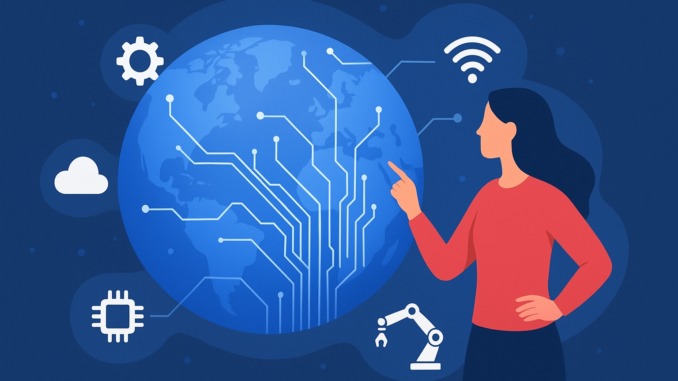
Top 10 Emerging Technologies Shaping the Future of 2025 and Beyond
Technology is evolving faster than ever. Every year, new innovations transform how we live, work, and interact with the world. As we move deeper into 2025 and look ahead to the coming decade, several emerging technologies are already paving the way for a smarter, more connected, and more efficient future. These advancements are not just trends—they are shaping industries, creating new opportunities, and redefining the global landscape.
Whether you are a student, entrepreneur, tech enthusiast, or someone curious about the future, understanding these technologies will help you stay ahead of the curve. In this article, we explore the top 10 emerging technologies driving change in 2025 and beyond.
1. Artificial Intelligence (AI) and Generative AI
AI has been growing for years, but 2025 marks a new era—one where AI becomes deeply integrated into daily life. Generative AI tools are now able to create human-like text, images, videos, and even computer code. From improving customer support to streamlining content creation, AI is becoming a digital assistant for everyone.
How AI Is Shaping the Future
- Smarter automation in workplaces
- Personalized healthcare and treatment plans
- More efficient business operations
- AI-driven education and learning tools
As AI gets more powerful, companies will rely on it for data analysis, cybersecurity, research, and innovation. In the future, AI may even help governments make better decisions and cities run more efficiently.
2. 5G and Next-Generation Connectivity
Fast, reliable internet is the foundation of digital transformation. With 5G technology expanding worldwide in 2025, connectivity is entering a new phase. This network provides ultra-fast speeds, low latency, and stronger performance even with millions of connected devices.
Future Impact of 5G
- Enhanced mobile gaming and streaming
- Smarter cities and advanced IoT applications
- Remote surgeries using real-time communication
- Better communication in autonomous vehicles
Looking beyond 5G, researchers are already exploring 6G, which promises even faster speeds and intelligent networking powered by AI.
3. Extended Reality (XR): AR, VR, and MR
Extended Reality (XR) combines Augmented Reality (AR), Virtual Reality (VR), and Mixed Reality (MR) into one powerful ecosystem. This technology is transforming entertainment, education, retail, and even professional training.
Examples of XR in 2025
- Virtual classrooms and immersive workplace training
- AR-powered shopping experiences
- VR fitness and virtual travel
- Mixed reality tools for architects and designers
In the near future, XR will make digital experiences more realistic and interactive, blurring the line between the physical and virtual worlds.
4. Blockchain and Web3 Technologies
Blockchain is moving beyond cryptocurrencies. In 2025, blockchain and Web3 technologies are becoming essential tools for digital identity, data security, and decentralized applications.
Where Blockchain Is Making an Impact
- Secure financial transactions
- Smart contracts for businesses
- Decentralized social networks
- Transparent supply chain systems
As privacy becomes a global concern, distributed ledger technology will empower users with more control over their data and online presence.
5. Autonomous Vehicles and Advanced Robotics
Self-driving cars, delivery drones, and intelligent robots are no longer just futuristic concepts—they are becoming part of daily life. Improved sensors, AI algorithms, and machine learning systems are accelerating the development of autonomous technologies.
Future Applications
- Self-driving taxis and public transportation
- Delivery drones for food, groceries, and medical supplies
- Warehouse automation using smart robots
- Intelligent robots for household tasks
By 2030, the transportation and logistics industry will be completely transformed by autonomous systems, reducing accidents and improving efficiency.
6. Internet of Things (IoT) and Smart Devices
The Internet of Things connects everyday objects—smartphones, TVs, refrigerators, wearables, home appliances, and industrial machines—to the internet. In 2025, IoT networks are expanding and becoming more intelligent, allowing devices to communicate seamlessly.
How IoT Improves Daily Life
- Smart homes that automate lighting, security, and energy
- Wearable devices tracking health in real time
- Smart factories improving production speed
- Smart farming using sensors and automation
IoT is expected to reach over 30 billion connected devices in the next few years, making it one of the most influential technologies of the decade.
7. Biotechnology and Bioengineering
Biotechnology is revolutionizing medicine, agriculture, and environmental sustainability. Modern gene-editing tools like CRISPR allow scientists to modify DNA with unprecedented accuracy. Meanwhile, bioengineering is creating new materials, medicines, and sustainable solutions.
Biotech Applications Transforming the Future
- Personalized medicine based on individual genetic profiles
- Lab-grown meat and sustainable food production
- Advanced vaccines and disease prevention
- Biodegradable materials and eco-friendly solutions
In the future, biotechnology may help cure genetic diseases, reduce hunger, and protect the planet.
8. Quantum Computing
Quantum computing remains one of the most groundbreaking technologies, capable of solving complex problems that traditional computers cannot handle. In 2025, major companies and governments are investing heavily in quantum research.
What Makes Quantum Computing Powerful
- It processes vast amounts of data at unimaginable speeds.
- It can accelerate scientific research, especially in medicine and climate science.
- It enhances cryptography and cybersecurity.
Quantum computers could help develop new medicines, optimize traffic systems, and even predict natural disasters more accurately.
9. Renewable Energy Technologies
The future of energy is green. As the world focuses on sustainability, renewable power is becoming cheaper and more efficient. Solar, wind, hydrogen energy, and next-generation batteries are leading the transition.
Emerging Trends in Clean Energy
- Ultra-efficient solar panels
- AI-powered smart grids
- Long-lasting energy storage systems
- Green hydrogen for transportation and industry
By 2030, many countries aim to replace fossil fuels with renewable alternatives, reducing pollution and fighting climate change.
10. Digital Twins and Smart Manufacturing
A digital twin is a virtual replica of a physical object, system, or process. This technology is transforming industries such as construction, aviation, healthcare, and manufacturing.
Benefits of Digital Twin Technology
- Predicting failures before they occur
- Improving product design and development
- Optimizing production lines
- Reducing maintenance costs
As smart factories continue to grow, digital twins will help companies make better decisions through real-time data and simulations.
Why These Technologies Matter for the Future
The technologies listed above are more than tools—they are the building blocks of the future. Here’s why they matter:
- They create new job opportunities and industries.
- They improve healthcare and quality of life.
- They make cities smarter and more efficient.
- They support global sustainability efforts.
- They help businesses innovate and compete globally.
Understanding these technologies gives individuals, students, and businesses a significant advantage in navigating the rapidly changing world.
Final Thoughts
As we move beyond 2025, emerging technologies will continue to shape the global landscape at an unprecedented pace. From AI and quantum computing to renewable energy and biotechnology, the future is filled with innovations that will redefine the way we live and work. Staying informed and adaptable is the key to thriving in this new technological era.